

In short: Achilles tendon pain can appear in the tendon above the heel or at the back of the heel where the tendon attaches to the heel bone. It is often linked to repeated strain, especially when activity is increased too quickly. Typical symptoms include morning pain and stiffness, pain that worsens with activity, swelling, thickening of the tendon and pain at the back of the heel when wearing shoes. A sudden pop in the back of your calf or heel can mean that the tendon has torn; if this happens, see a doctor immediately.
Are you suffering from Achilles tendon pain?
The Achilles tendon connects the calf muscles to the heel bone. You use it when you walk, run, climb stairs, jump and stand on tiptoe. It can withstand great stress, but it is also prone to irritation and inflammation when it is repeatedly overloaded.
Achilles tendon pain may occur within the tendon itself or at the point where it attaches to the heel bone. This distinction matters because the likely course of the problem and the treatment plan may differ.
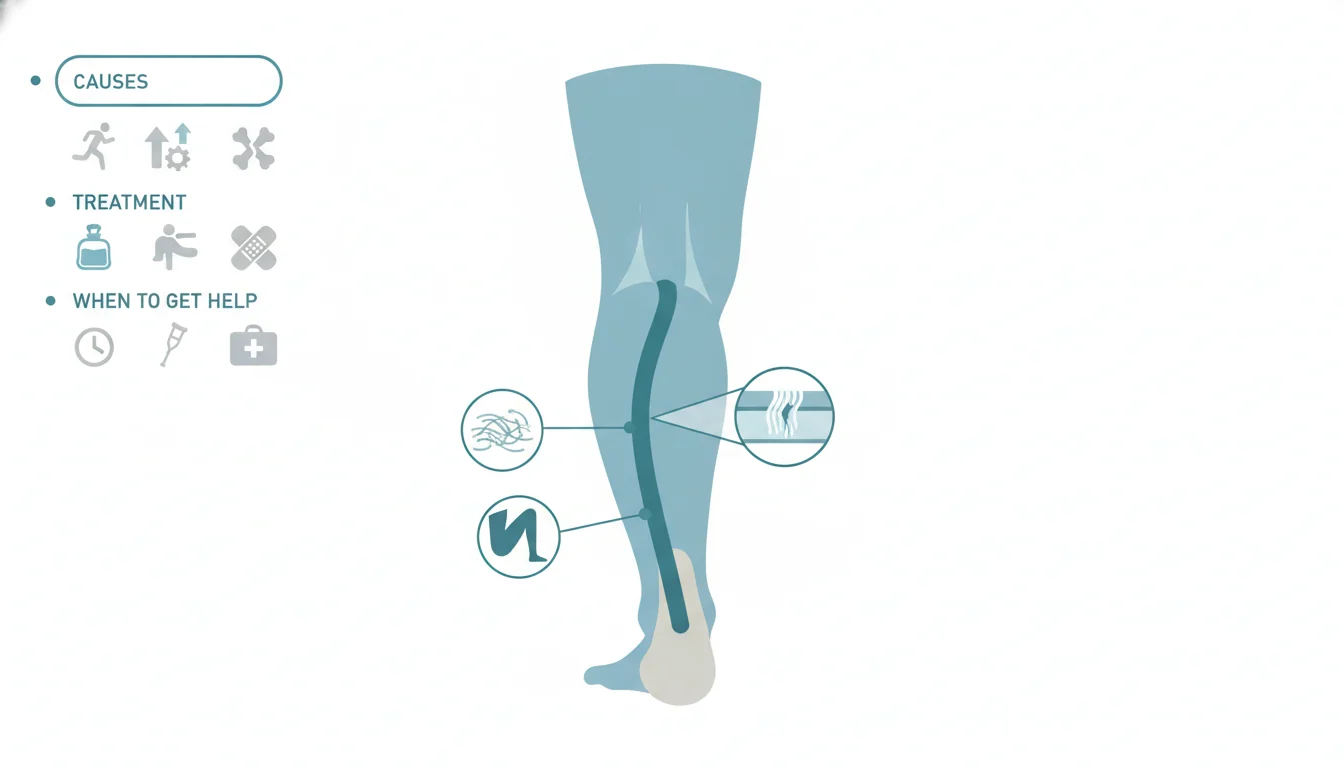
The problem may lie in the tendon itself or in the insertion
Achilles tendinitis can affect the middle part of the tendon or the lower part where it inserts into the heel bone.
- Noninsertional Achilles tendinitis affects the middle portion of the tendon above the heel. Tendon fibres may begin to break down, tiny tears can develop, and the tendon may become swollen and thickened. This type more often affects younger, active people, especially runners.
- Insertional Achilles tendinitis affects the lower portion of the tendon at the heel bone. Damaged fibres may harden over time, and bone spurs can form at the back of the heel. It can occur at any age and with any activity level, and tight calf muscles can increase stress at the insertion.
The two types can occur separately or at the same time. Because the type of problem may not be clear from the feeling of pain alone, an orthopaedic examination helps to determine where the symptoms are coming from.
Common symptoms
Symptoms of Achilles tendinitis can include:
- pain and stiffness along the Achilles tendon in the morning,
- pain along the tendon or at the back of the heel that worsens with activity,
- severe pain the day after exercise,
- thickening of the tendon,
- bone spur formation with insertional tendinitis,
- swelling that is present all the time and gets worse during the day or with activity,
- pain at the back of the heel when wearing shoes.
A sudden pop in the back of your calf or heel may be a sign of a torn Achilles tendon. If you think you may have torn the tendon, see a doctor immediately.
Why the Achilles tendon hurts
Achilles tendinitis is usually not related to one specific injury. It often results from repetitive stress on the tendon, especially when the body is asked to do too much, too quickly.
Factors that can contribute include a sudden increase in the amount or intensity of exercise, a change in shoes, tight calf muscles and an enlarged bone at the back of the heel that rubs on the tendon.
What can help at first
The first step in reducing pain is usually to reduce or stop the activities that make the pain worse. If running or another high-impact activity irritates the tendon, lower-impact activities such as cycling, elliptical exercise or swimming can reduce stress on the Achilles tendon while keeping you active.
Ice can be placed on the most painful area of the tendon for up to 20 minutes at a time, and it should be removed sooner if the skin becomes numb. Anti-inflammatory medicines such as ibuprofen or naproxen can reduce pain and swelling, but they do not reduce thickening of a damaged tendon; they should not be used for more than one month without talking to a primary care doctor.
Physical therapy can be helpful. Calf stretching and eccentric strengthening exercises may reduce stress on the tendon, but heel-drop exercises should be done correctly and are not used for insertional Achilles tendinitis. At first, eccentric exercises should be performed under the supervision of a physiotherapist.
Examination and surgery if needed
During an orthopaedic examination, the doctor asks about your symptoms and examines the foot and ankle. They look for swelling along the tendon or at the back of the heel, pain in the middle of the tendon, pain near the insertion on the heel bone, heel pain when stretching the calf and limited ankle movement.
Imaging may be used when needed. X-rays can show bone spurs at the back of the heel or calcification in the tendon. Ultrasound can be performed in an office setting and can show the tendon. MRI is not usually necessary to diagnose Achilles tendinitis, but it can be important when surgery is being planned because it shows the severity of tendon damage.
Treatment depends on the findings. It can include activity modification, physical therapy exercises, suitable shoes or orthotic devices, heel lifts, a short period in a walking boot, night splinting and shockwave therapy. Cortisone injections into the Achilles tendon are not recommended because they can cause the tendon to rupture.
Surgery for Achilles tendinitis is considered only if pain does not improve after six months of nonsurgical treatment. The type of operation depends on the location of the tendinitis and the amount of tendon damage. Surgery may involve removing damaged tendon tissue, removing bone spurs at the heel, reattaching the tendon to the heel bone, lengthening a tight calf muscle or using minimally invasive techniques.
At HR Clinic, the pathway starts with consultation and diagnostics; surgery is considered only when the doctor decides it is needed after examination. Orthopaedic consultations are with Professor Hart, and a referral from a general practitioner is not necessary.
If surgery is indicated and everything is in order, the procedure may take place within a week of the consultation.
What to expect at HR Clinic
You can book a personal consultation in Znojmo or Vienna online or by phone. The consultation includes examination, evaluation of available results, diagnosis and a treatment plan. If an operation is indicated, it takes place within a maximum of 24-hour care in Znojmo, followed by planned rehabilitation care.
The practical steps from booking to consultation, possible procedure and follow-up rehabilitation are described on How it works.
If you already have scans or medical reports, bring them to the consultation. They can help the doctor assess the tendon and plan the next steps.
How to reduce repeated irritation
You cannot prevent every tendon problem, but you can reduce repeated stress by increasing training gradually, paying attention to calf tightness, using shoes that do not irritate the back of the heel and avoiding a rapid return to painful activity.
If Achilles tendon pain keeps returning or limits walking, running, sport or work, an orthopaedic consultation can clarify whether the problem is in the tendon itself or at the insertion on the heel bone.
Frequently asked questions
Why does my Achilles tendon hurt in the morning?
Pain and stiffness along the Achilles tendon in the morning are common symptoms of Achilles tendinitis. Morning symptoms can occur when the tendon is irritated or overloaded.
Can the pain come from the heel rather than the tendon itself?
Yes. Pain can come from the tendon itself or from the insertion where the tendon attaches to the heel bone. In insertional Achilles tendinitis, bone spurs may form at the back of the heel.
Is Achilles tendon pain always caused by one injury?
No. Achilles tendinitis is usually not related to one specific injury. It often develops from repeated stress, especially when activity is increased too quickly.
What does a sudden pop in the calf or heel mean?
A sudden pop in the back of your calf or heel can be a sign of a torn Achilles tendon. If this happens, see a doctor immediately.
Are heel-drop exercises always suitable?
No. Heel-drop exercises are used for noninsertional Achilles tendinitis and should not be performed for insertional Achilles tendinitis. They should first be learned under the supervision of a physiotherapist.
Are cortisone injections used for Achilles tendinitis?
Cortisone injections into the Achilles tendon are not recommended because they can cause the tendon to rupture.
Do I need a referral to book a consultation at HR Clinic?
No. A referral from a general practitioner is not necessary; you can book online or by phone.
Are you suffering from Achilles tendon pain? Book an orthopaedic consultation at HR Clinic online, or call +420 515 225 520.
Updated: 6 November 2026
First published on March 4, 2026.